Beyond Treatment: Why Nutrition Must Be Part of Personalised Sickle Cell Care

As genomic medicine creates new possibilities for people living with sickle cell disorder (SCD), Dr Claudine Matthews believes personalised care must extend beyond treatment alone.
A Consultant Dietitian and founder of the Sickle Cell Nutrition Academy (SCNA), Dr Matthews has dedicated more than a decade to advocating for better nutritional care for people living with the condition. Most recently, she contributed to the first chapter on sickle cell nutrition in the Manual of Dietetic Practice, a key professional reference for dietitians.
Her message is simple: to ensure nutrition is recognised as an essential part of high-quality, personalised sickle cell care
Why nutrition matters in sickle cell disease
SCD is a genetic condition that affects haemoglobin, the protein responsible for carrying oxygen around the body. As genomic medicine continues to transform treatment options through approaches such as gene therapies, Dr Matthews believes it is important to understand how the condition affects people’s nutritional needs.
Many of the nutritional challenges experienced by people living with SCD stem directly from the condition itself. The body is constantly working to replace red blood cells lost through chronic haemolysis, while oxidative stress, inflammation and an increased risk of infection place further demands on the body’s nutrient reserves.
“This means patients require higher amounts of nutrients, vitamins, minerals and protein to support the production of red blood cells,” Dr Matthews explains.
Meeting these increased nutritional needs is not always straightforward. Reduced appetite during sickle cell crises can make it difficult for people to consume enough energy and nutrients to support their recovery, increasing the risk of malnutrition. Hydration is also critical.
“People with sickle cell often have higher fluid requirements. If those requirements are not met, the risk of dehydration increases, and dehydration is a known trigger for sickle cell crises.”
Personalised medicine needs personalised nutritional care
In an era of increasingly personalised treatment, Dr Matthews believes nutritional care should be embedded throughout the patient pathway.
“Nutritional care is about preventing and treating malnutrition, supporting people to manage their condition and optimising health outcomes throughout their treatment journey,” she explains.
This goes beyond general dietary advice and includes nutritional screening, assessment, personalised interventions and ongoing monitoring, helping support patients before, during and after treatment.
“By embedding nutritional care throughout the patient pathway, healthcare teams can help patients prepare for treatment, support recovery and improve overall outcomes.”
The role of dietitians
Dr Matthews believes dietitians should be a routine part of both sickle cell and genomic medicine multidisciplinary teams.
She developed the first national nutrition standards for sickle cell care in 2018, which highlighted the need for greater dietetic involvement. Her research found that integrating dietitians into care teams can improve awareness of nutritional needs, strengthen referral pathways and increase access to specialist support.
“Patients benefit from specialist nutritional knowledge throughout the entire treatment journey, from decision-making through to recovery,” she says.
Dietitians can help ensure nutritional considerations are included alongside clinical and genomic decision-making.
“If we’re talking about personalised medicine, we also need personalised nutritional care,” Dr Matthews says.
Addressing health inequalities
For Dr Matthews, improving nutritional care is also an important part of addressing health inequalities in SCD. She believes greater awareness among both healthcare professionals and patients is needed to ensure nutritional risks are recognised early and appropriate support is put in place.
“Without awareness [of the link between sickle cell and nutrition], the problem doesn’t exist,” she says. “And if patients don’t have access to the care they need, they suffer.”
Creating tailored resources
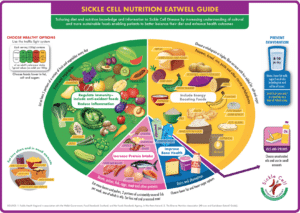
Through the Sickle Cell Nutrition Academy, Dr Matthews is helping to improve nutritional care through education, advocacy and the development of practical resources for healthcare professionals and patients. The organisation has also developed the first tailored Sickle Cell Nutrition Eatwell Guide through an NHS England-supported co-design project.

Looking ahead
For Dr Matthews, there is one key message she hopes healthcare professionals and patients will take away:
“We need to reframe nutrition in sickle cell through the lens of nutritional care.”
As genomic medicine continues to advance, Dr Matthews believes healthcare services must ensure supportive care evolves alongside it. For her, personalised nutritional care is not an optional extra, but an essential part of helping people with SCD achieve the best possible outcomes.


