Cardiac Arrest and Thoracic Aortic Dissection
Identifying people who are at risk following a sudden cardiac arrest in the family.

What is Sudden Cardiac Arrest?
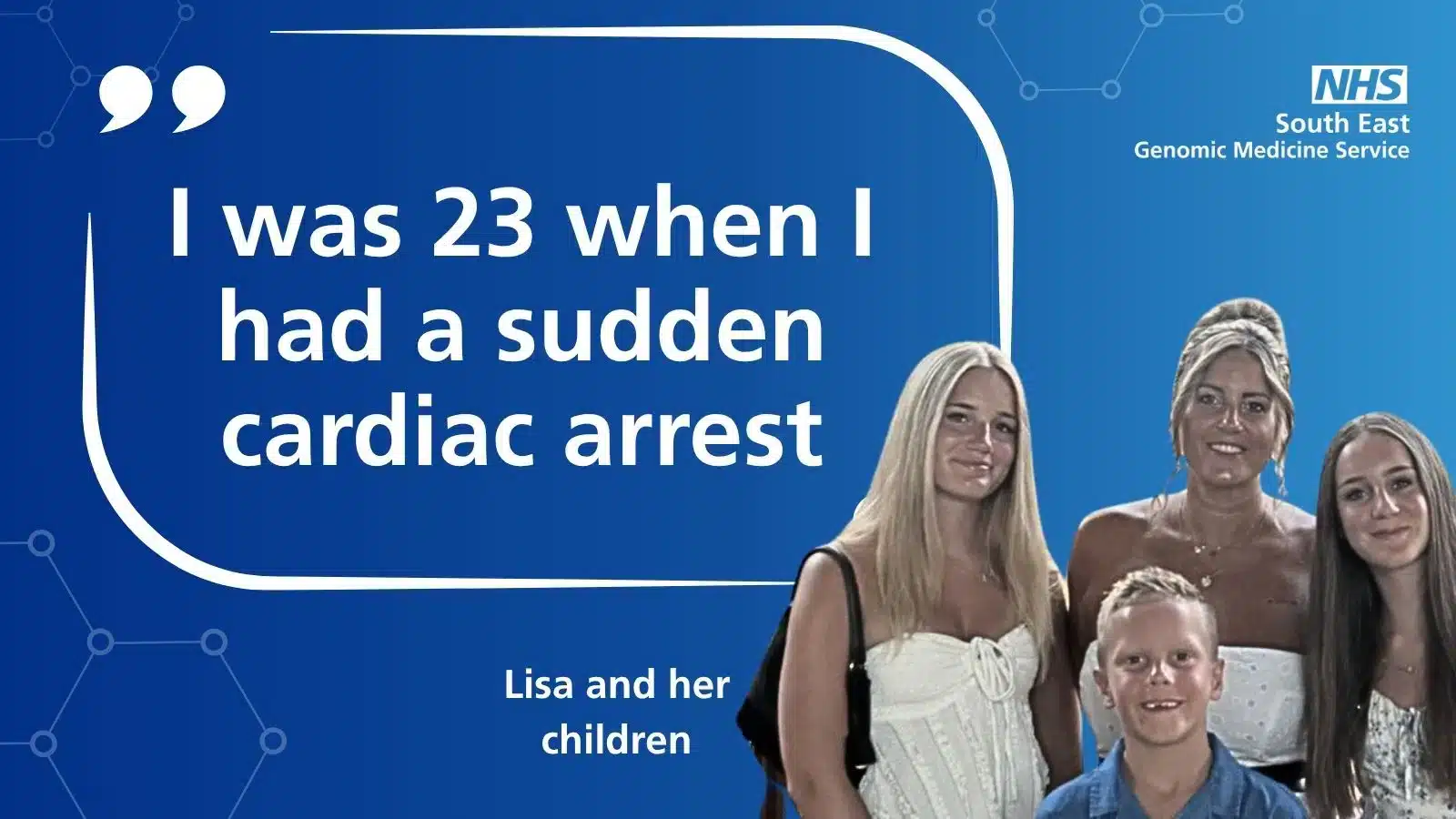
Sudden Cardiac Arrest (SCA) is the sudden and unexpected loss of heart activity which results in blood not being pumped to the brain and vital organs. When this occurs with no obvious cause your medical team may explore whether a genetic condition could have contributed to your cardiac arrest.
What is Thoracic Aortic Dissection?
Thoracic Aortic Dissection (TAD) occurs when the inner layer of the aorta (intima) tears and blood finds it’s way into the middle layer (media) creating a false lumen which can lead to complications like rupture, a heart attack, stroke or loss of blood flow to the vital organs. When this happens in younger adults, genetic causes are common.

Why is this important?
There are three key parts to the pathway:
-
Routine blood sampling for DNA storage so that genetic testing can be performed at a later stage if appropriate;
-
Specialist assessment in an Inherited Cardiac Conditions (ICC) service;
-
Signposting eligible family members for screening for the same condition.
Currently, this pathway is inconsistent across England; blood samples are not routinely retained and family members are not consistently signposted to their local ICC service.
What have we done so far?
The pathway has been established in pilot sites including Guy’s and St Thomas’ Hospitals, St George’s Hospital, Kings College Hospital, and Frimley Health. We are delivering education sessions to ITU teams to help them successfully implement this pathway into their routine care. This is ready for implementation across England.

What are the next steps?
We want to embed this pathway across the South East GMS region. Our ICC coordinators will be engaging with Trusts (including cardiology and ITU departments) across the region.
Do you work in Cardiology or ITU and want to set this pathway up in your Trust?

Resources for professionals
We have developed a full pathway implementation toolkit to help you and your teams establish and sustain a pathway for DNA storage and referral when someone presents with an out of hospital cardiac arrest or thoracic aortic dissection.
Click the link below to open up the NHS SCA and TAD pathway. This identifies the steps taken by ITU teams and ICC centres after someone has experienced a Sudden Cardiac Arrest or Thoracic Aortic Dissection.
In this one hour recorded webinar from June 2026, you will hear from Professor of Cardiovascular Medicine, Prof Elijah Behr from St George’s Hospital, and Clinical Nurse Specialist in Inherited Cardiac Conditions, Helena Davison from Queen Elizabeth University Hospital.
Professor Elijah Behr is the clinical lead of this project in the South East, and Helena discusses the successful initiation of their own Sudden Cardiac Arrest Pathway in Scotland.
The link below will take you to our webpage with two informative videos about when a genetic test is useful for a patient and how to identify the correct genetic test for your patient.
We have also established a pathway for people affected by Sudden Cardiac Death. This includes engaging with coroners, pathologists, and medical examiners across the Region and implementing a pathway for genetic testing after someone has died due to an inherited cardiac condition. Click the link to learn more: Sudden Cardiac Death Project – South East Genomics : South East Genomics
Browse our other webpages dedicated to cardiovascular genetic testing
Resources for families and those affected by Cardiac Arrest and Thoracic Aortic Dissection
Read and download our leaflet for families affected by Cardiac Arrest and Thoracic Aortic Dissection. This will provide guidance on genetic testing, explain what conditions can cause SCA and TAD, and signpost you to further support.
In this one hour recorded webinar from June 2026, you will hear from Professor of Cardiovascular Medicine, Prof Elijah Behr from St George’s Hospital, and Clinical Nurse Specialist in Inherited Cardiac Conditions, Helena Davison from Queen Elizabeth University Hospital.
Professor Elijah Behr is the clinical lead of this project in the South East, and Helena discusses the successful initiation of their own Sudden Cardiac Arrest Pathway in Scotland.

Watch the video linked below to learn more about what genetic testing is. This video is aimed at professionals, but may give you a better indication of why genetic testing is done, as well as why genetic testing has been recommended, or not recommended, for you or your family.
- British Heart Foundation (opens in a new tab)
- Cardiac Risk in the Young (opens in a new tab)
- Patient website (opens in a new tab)
- Genetic Alliance UK (opens in a new tab)
- Aortic Dissection Awareness UK and Ireland (opens in a new tab)
- The Compassionate Friend (opens in a new tab)
- Cardiomyopathy UK (opens in a new tab)
The British Inherited Cardiovascular Conditions website allows you to search for your nearest ICC centre or view all centres nationally.
We have also established a pathway for people affected by Sudden Cardiac Death. This includes engaging with coroners, pathologists, and medical examiners across the Region and implementing a pathway for genetic testing after someone has died due to an inherited cardiac condition. Click the link to learn more: Sudden Cardiac Death Project – South East Genomics : South East Genomics
Who are we working with?

The British Heart Foundation, who provided the funding for this pathway initiation

Inherited Cardiac Conditions clinics across the South East (including ICC coordinators, specialist nurses, and genetic counsellors)

ITU and cardiology teams across the region
Meet your pathway coordinators
Ciara Gorman
Ciara is an Inherited Cardiac Conditions (ICC) nurse at St George’s Hospital, currently working as the Sudden Unexpected Death (SUD) Pathway Coordinator. With a background in coronary care, she became a specialist Arrythmia nurse at Kings College Hospital. She recognises the impact that a diagnosed inherited cardiac condition can have and is passionate about supporting patients and their families to be informed about genetic testing.
Regions served:
- London Inner West
- London South
- Surrey
- West Sussex, Brighton and Hove
If you are a Trust within these areas, speak to Ciara for more info or to refer in:
SCD.referrals@stgeorges.nhs.uk

Emma O’Malley
Emma is a Genetic Counsellor specialising in Inherited Cardiac Conditions at Guys and St Thomas’ NHS Foundation Trust. Her passion is improving patient and family experience. She believes this pathway can reduce the stress of navigating healthcare following the tragic loss of a loved one, as well as leading to improved health outcomes for families.
Regions served:
- East Sussex
- Kent Central and South East
- Kent Mid and Medway
- Kent North East
- Kent North West
- London Inner South
Speak to Emma for more info or to refer in:
Meet the team
-
Professor Elijah Behr
National Lead for the SCD Pilot and Professor in Cardiovascular Medicine
-
Dr Frances Elmslie
Clinical Director
-
Rachel Bastiaenen
Joint Rare Disease Lead
-

Jana Gurasashvili
NHS Coronial Sudden Unexpected Death (NHS C-SUD) Pathway Coordinator
-

Carmel Raymundo
Programme Support Manager


