Sudden Cardiac Death Project
Identifying people who are at risk following a sudden cardiac death in the family.
What is Sudden Cardiac Death?
Sudden cardiac death (SCD) is when someone passes away unexpectedly and comprehensive investigations, including post-mortem examination of the heart, suggest an underlying cardiac condition. Some of these conditions may be inherited, meaning that families may benefit from genomic testing to establish a diagnosis.

What are we trying to do?
Following the success of a national pilot funded by NHS England and supported by the British Heart Foundation, we are expanding access to a pathway which aims to identify family members of those who have recently died following an unexplained cardiac incident, to offer them genetic testing and prevent further deaths.
This is known as the NHS and Coronial Service Sudden Unexpected Death (SUD) pathway. You may also see SUD referred to as a Sudden Cardiac Death (SCD).
Why is this important?
At least 800 sudden cardiac deaths (SCDs) occur annually in the UK in people under 35 years of age.
Where the cause is genetic or ‘inherited’, it is important to understand the underlying nature of the genetic heart disease and identify other family members at risk.
This work will prevent further sudden deaths in other family members.
The pathway aims to include anyone who dies unexpectedly where an inherited cardiac condition (ICC) is thought to be likely.
There are three key parts to the pathway:
- routine tissue retention for genetic testing when there is a potential genetic cardiac cause of death
- coronial investigation and communication to an Inherited Cardiac Condition Centre (ICC)
- signposting of eligible family members for follow-up and screening for the same condition.
Currently, this pathway is inconsistent across England with some family members not being signposted to the ICC Centre and tissue not being retained for testing.
If we can reach the family of someone who has died from a Sudden Cardiac Death which was caused by an inherited cardiac condition, then they can be be screened and if necessary their condition can be managed which will potentially prevent further deaths.
What have we done so far?
We have developed a region wide clinical pathway with cardiologists, inherited cardiac conditions (ICC) coordinators, pathologists, and coroners.
We have established the pathway in many coroner’s patches across the South East and delivered education and training to coroners and pathologists to successfully and confidently implement this pathway into their routine care.
Once family members are identified, our ICC coordinators provide support through the cardiac clinical screening and cascade testing process, as well as providing genetic counsellors to offer further support.

What are the next steps?
We want to make this a routine pathway within every service across the South East. Our ICC coordinators are engaging in extensive engagement with Senior Coroners.
Are you a coroner in the South East?

Who are we working with?

The British Heart Foundation, who provided the funding for this pathway initiation

Inherited Cardiac Conditions clinics across the South East (including ICC coordinators, specialist nurses, and genetic counsellors)

The Coronial Service and Chief Coroner’s Office
Resources for families and those affected by Sudden Cardiac Death
Read and download our leaflet for families affected by Sudden Cardiac Death. This will provide guidance on genetic testing, explain what conditions can cause sudden cardiac death, and signpost you to further support.
Read and download our leaflet for parents and families of children affected by Sudden Cardiac Death. This will provide guidance on genetic testing, explain what conditions can cause sudden cardiac death in the young, and signpost you to further support.
Hear from Professor Elijah Behr, a consultant cardiologist at St. George’s Hospital who is leading this work, alongside Claire Kirkby, inherited cardiac conditions nurse.
We were also joined by Dr Steven Cox, Chief Executive of the charity Cardiac Risk in the Young (CRY), and Lilly Burke, Director of CRY’s Support Programme.

Watch the video linked below to learn more about what genetic testing is. This video is aimed at professionals, but may give you a better indication of why genetic testing is done, as well as why genetic testing has been recommended, or not recommended, for you or your family.
- British Heart Foundation (opens in a new tab)
- Cardiac Risk in the Young (opens in a new tab)
- Sudden Arrhythmic Death UK (opens in a new tab)
- Patient website (opens in a new tab)
- Genetic Alliance UK (opens in a new tab)
- Aortic Dissection Awareness UK and Ireland (opens in a new tab)
- The Compassionate Friend (opens in a new tab)
- Cardiomyopathy UK (opens in a new tab)
The British Inherited Cardiovascular Conditions website allows you to search for your nearest ICC centre or view all centres nationally.
Alongside our work on Sudden Cardiac Death, we are also establishing a pathway for people affected by Sudden Cardiac Arrest (SCA). This identifies people who present in hospital after a Sudden Cardiac Arrest, taking samples for future genetic testing if required. Patients and families will be supported through the process and screening or testing will be offered to family members if appropriate.
Cardiac Arrest and Thoracic Aortic Dissection – South East Genomics : South East Genomics
Resources for professionals
Click the link below to open up the NHS Coronial Sudden Unexpected Death pathway. This identifies the steps taken by pathologists, coroners, and our network of specialists once someone has died from Sudden Cardiac Death.
For further information on your role in the pathway, as well as details for further information and to get in contact with your local ICC coordinator, click the link below.
Hear from Professor Elijah Behr, a consultant cardiologist at St. George’s Hospital who is leading this work, alongside Claire Kirkby, inherited cardiac conditions nurse.
We were also joined by Dr Steven Cox, Chief Executive of the charity Cardiac Risk in the Young (CRY), and Lilly Burke, Director of CRY’s Support Programme.
The link below will take you to our webpage with two informative videos about when a genetic test is useful for a patient and how to identify the correct genetic test for your patient.
Meet your C-SUD pathway coordinators
Ciara Gorman
Ciara is an Inherited Cardiac Conditions (ICC) nurse at St George’s Hospital, currently working as the Sudden Unexpected Death (SUD) Pathway Coordinator. With a background in coronary care, she became a specialist Arrythmia nurse at Kings College Hospital. She recognises the impact that a diagnosed inherited cardiac condition can have and is passionate about supporting patients and their families to be informed about genetic testing.
Coronial regions served:
- London Inner West
- London South
- Surrey
- West Sussex, Brighton and Hove
If you are a coroner within these areas, speak to Alessia for more info or to refer in:
SCD.referrals@stgeorges.nhs.uk
Coronial regions served:
- London Inner West
- London South
- Surrey
- West Sussex, Brighton and Hove
If you are a coroner within these areas, speak to Alessia for more info or to refer in:
SCD.referrals@stgeorges.nhs.uk

Jana Garasashvili
Jana is a Genetic Counsellor specialising in Inherited Cardiac Conditions at Guy’s and St Thomas’ NHS Foundation Trust. Her passion is improving patient and family experience. She believes the Sudden Unexpected Death (SUD) pathway can reduce the stress of navigating healthcare following the tragic loss of a loved one, as well as leading to improved health outcomes for families.
Coronial regions served:
- East Sussex
- Kent Central and South East
- Kent Mid and Medway
- Kent North East
- Kent North West
- London Inner South
If you are a coroner within these areas, speak to Jana for more info or to refer in:

Meet the team
-
Professor Elijah Behr
National Lead for the SCD Pilot and Professor in Cardiovascular Medicine
-
Dr Frances Elmslie
Clinical Director
-
Rachel Bastiaenen
Joint Rare Disease Lead
-
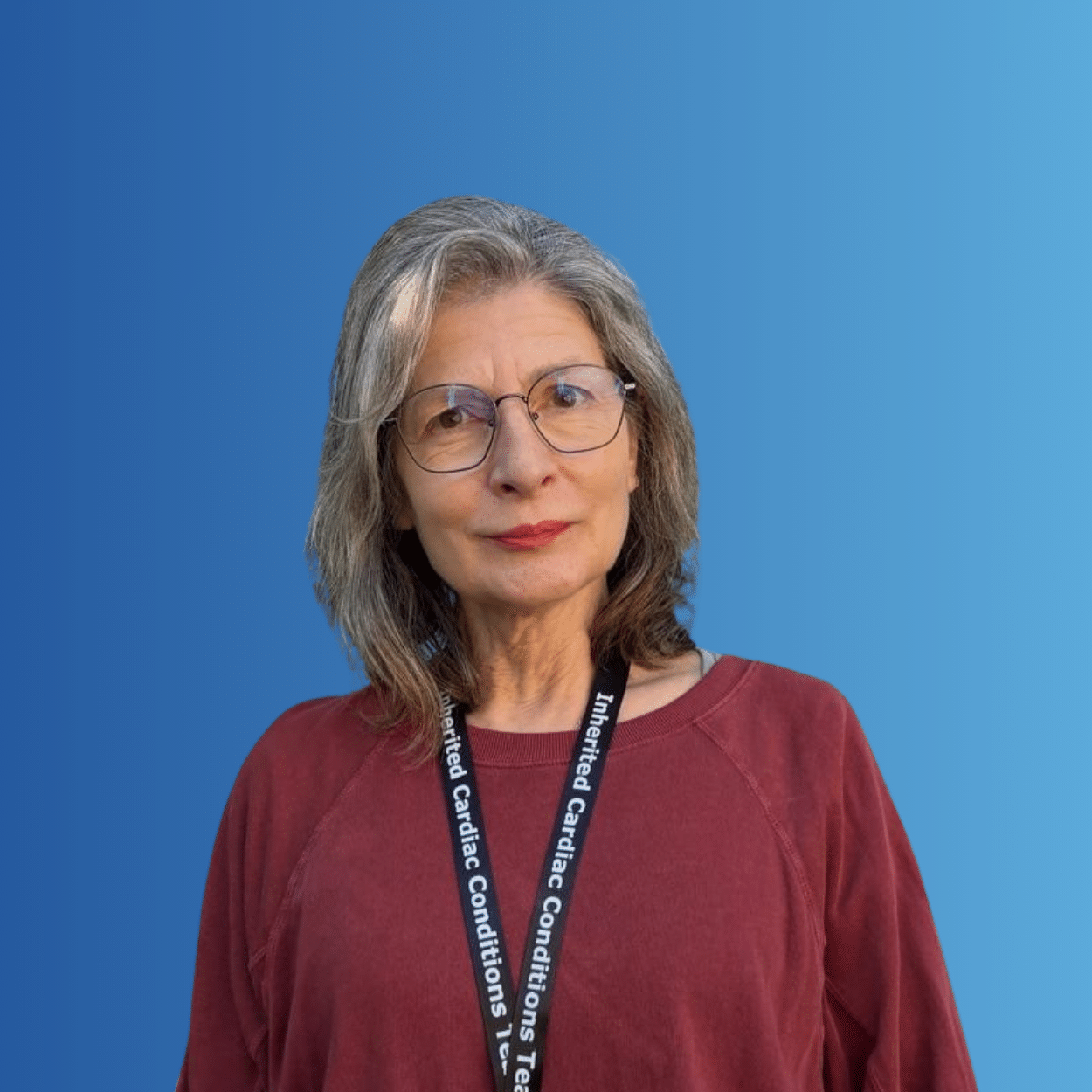
Jana Gurasashvili
NHS Coronial Sudden Unexpected Death (NHS C-SUD) Pathway Coordinator
-

Carmel Raymundo
Programme Support Manager


