Recurrent miscarriage
Your questions answered
If you have had three or more miscarriages, you are entitled to genetic testing of the pregnancy tissue on the NHS. Testing can sometimes help explain why your pregnancies ended, and what this might mean for the future.

Genetic testing after recurrent miscarriage
If you have had three or more miscarriages, you are entitled to genetic testing on the NHS. Testing can sometimes help explain why your pregnancies ended, and what this might mean for the future.
This website is here to help you understand recurrent miscarriage and genetic testing at your own pace. It explains:
- what recurrent miscarriage is and why it can happen
- who can have genetic testing and how the testing works
- what your results might mean
- where you can find support
A note about language. We created this information with women who have personal experience of multiple miscarriages and genetic testing. We have chosen our words carefully, but we know everyone has their own preferences. Some people talk about their baby, while others talk about a pregnancy. Please use whatever words feel right for you.
What is recurrent miscarriage?
Recurrent miscarriage means losing three or more pregnancies before 24 weeks. The losses don’t need to have happened one after another, and they don’t need to have been with the same partner. You may also have had a successful pregnancy in between. Around 1 in every 100 women experience recurrent miscarriage.
Very early losses (chemical pregnancies) are included. Ectopic pregnancies and molar pregnancies are not included, because they have different medical causes.
There are many possible reasons for recurrent miscarriage, and for many people no cause is found. The most common cause of early miscarriage is a change in the number of chromosomes in the pregnancy. This usually happens by chance. Genetic testing of the pregnancy tissue can look for this, and The biology explains how it happens.
After three miscarriages, you should be offered tests to look for a cause, including genetic testing. The genetic pathway explains who can have testing and what happens.
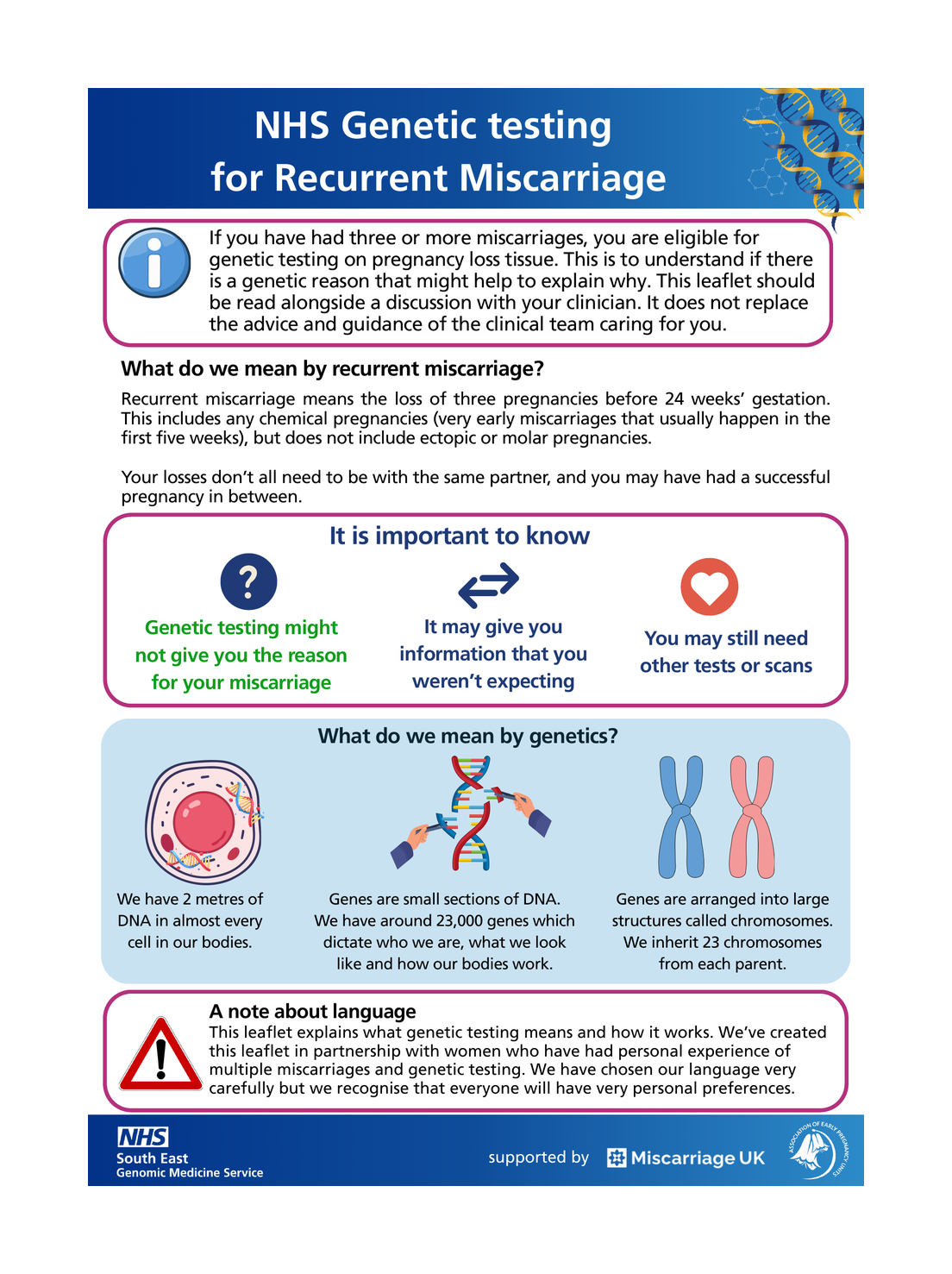
Genetic testing for Recurrent Miscarriage.
Our leaflet explains what genetic testing of the pregnancy tissue is, how it works and what your results might mean. We wrote it with women who have been through recurrent miscarriage, in partnership with Miscarriage UK and the Association of Early Pregnancy Units. You can download it, print it, or show it to your care team.
Who we worked with
This website was developed by the South East Genomic Medicine Service, together with Miscarriage UK and the Association of Early Pregnancy Units.