Support for your patients
The patient leaflet, talking about testing, and where to signpost
Women told us that information up front made a real difference. Here you will find our patient leaflet, tips for talking about genetic testing, and trusted sources of support.

Being offered genetic testing after a third miscarriage can raise a lot of questions, often at a very difficult time. This page brings together what you need to support your patients: our patient leaflet to share, tips on talking about genetic testing based on what women told us, and trusted organisations to signpost to for information and emotional support.
You don’t need to be a genetics expert. Clear, kind information at the right time can make a real difference.
The patient leaflet
Our patient leaflet, ‘NHS Genetic testing after three miscarriages’ was co-written with women who have had recurrent miscarriages, and is co-branded with Miscarriage UK and the Association of Early Pregnancy Units. It explains who can have testing, how it works and what the results might mean. Please give it to anyone having their third miscarriage, or later.
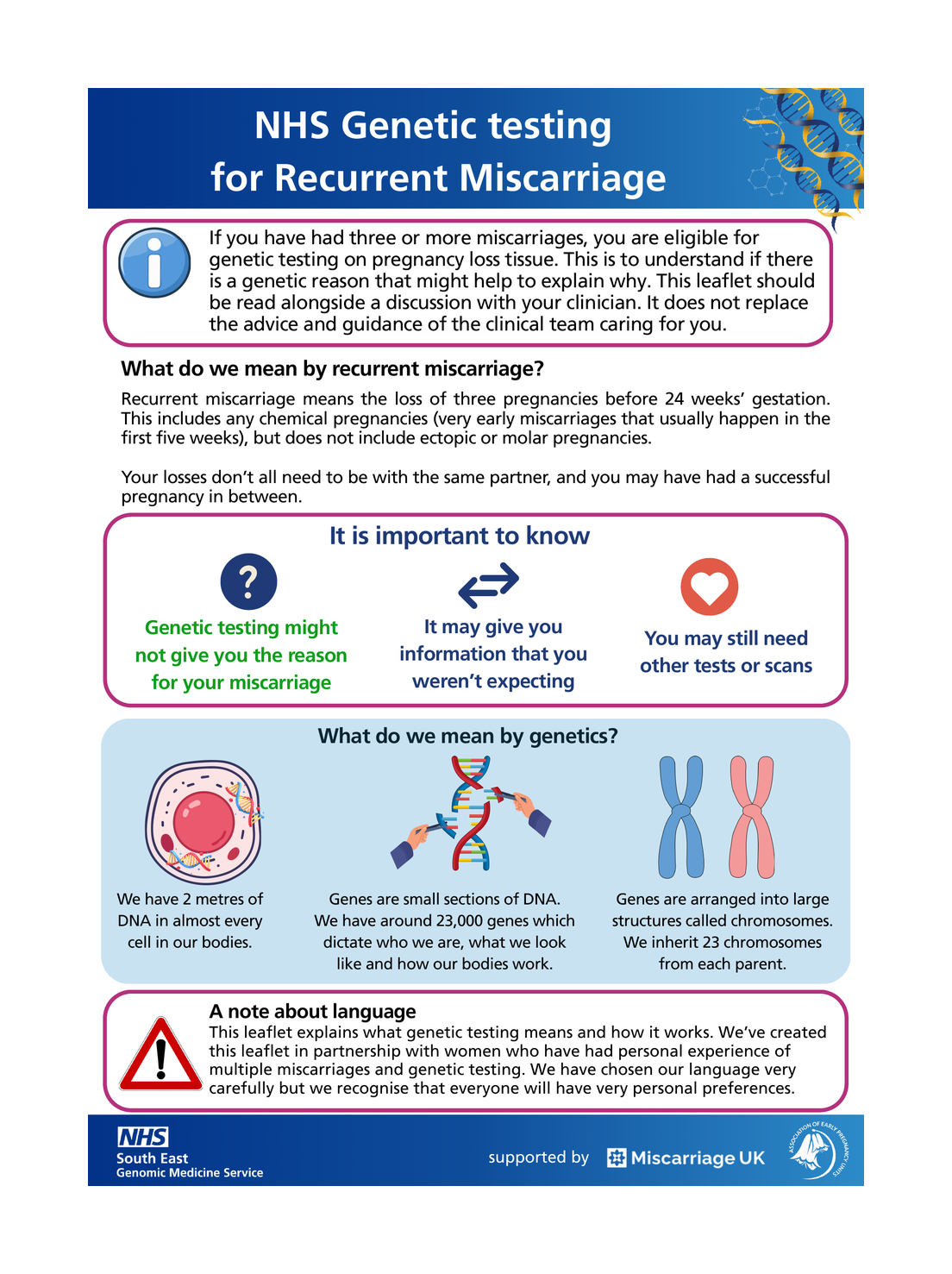
There are also patient webpages, which go into more detail: The biology, The genetic pathway, Support for you and FAQs. You can share the link with your patients.
Talking about genetic testing
Women told us that information up front made a real difference. These points come from what they told us.
Mention testing at the third loss, or later, before the tissue is sent away or disposed of. Many women only found out about testing by researching it themselves.
Testing can sometimes explain why a pregnancy ended and what it might mean for the future. Many women told us that just knowing was valuable.
A normal result doesn’t rule out other causes, and some samples can’t be tested.
The test can show the sex. Ask whether they want to know, but explain that a result involving the X or Y chromosome will need to be discussed.
The lab aims to report within 6 weeks. Tell them who will contact them with the result.
Point them to the leaflet, the patient webpages and the support organisations below.
Where to signpost
These are the most useful places to point patients to. The full list of patient links is on the patient pages.
Recurrent miscarriage (Miscarriage UK)
What recurrent miscarriage is, possible causes, tests and emotional support.
Recurrent miscarriage: definition, causes and care (Tommy's)
Plain-language overview of causes, tests and care in a future pregnancy.
Your options and decisions during miscarriage (Tommy's)
Expectant, medical and surgical management explained for patients.
What happens to my baby's body after a miscarriage (Tommy's)
Choices about the pregnancy remains, including testing.
Miscarriage UK support line and live chat
Phone, live chat and WhatsApp support, with free interpreters and BSL video relay.
Tommy's Helpline
A free helpline run by Tommy's midwives.
Sands helpline
Free bereavement support for anyone affected by pregnancy or baby loss.
Free specialist counselling (Petals)
Free counselling after pregnancy and baby loss, including recurrent miscarriage.
NHS Talking Therapies (NHS)
Free NHS therapy. Patients can refer themselves.
Dads and partners: miscarriage support (Tommy's)
Support for partners, who often feel overlooked.
Rights to time off and pay after pregnancy loss (Maternity Action)
Employment rights after pregnancy loss.
Request a baby loss certificate (GOV.UK)
A free, optional certificate to recognise a loss before 24 weeks (England).
Pregnancy after a miscarriage (Miscarriage UK)
Support for patients thinking about, or in, another pregnancy.
Unique guides to chromosome changes (Unique)
Plain-language guides to specific chromosome changes.
ARC helpline (ARC)
Non-directive support from trained staff about tests and results in pregnancy.