Why this is important
What women and professionals told us, and what our data shows
In 2026 we listened to women and healthcare professionals to understand why so few women are offered genetic testing after recurrent miscarriage.

About this work
In 2026 the South East Genomic Medicine Service looked at why women were not being offered genetic testing after recurrent miscarriage. Clinical Genetics were seeing fewer referrals than expected. At the same time, the lab was receiving referrals that did not meet the National Genomic Test Directory criteria, and samples that could not be tested.
We spoke to 10 women and 10 healthcare professionals, as well as charities including Tommy’s. Each conversation was supported by the South East GMS Lead Midwife.
How can we improve the experiences of people who are entitled to genetic testing following recurrent miscarriages? Our June 2026 report sets out what we heard and our recommendations.
The headlines

Significant lack of education for healthcare professionals

Access to genetic testing is often not part of routine care

Information and support for women is critical

Access to genetic testing isn't currently equitable

Everyone we spoke to felt that the knowledge genetic testing gave them was invaluable
What women told us
Only 1 of the 10 women had been offered genetic testing. Many had to find out about it themselves and ask for it while grieving another loss. They told us that they were not routinely offered testing, that results weren’t explained, and that no psychological support was offered.
“After three miscarriages, I expected my care to become more proactive and to get help to find some answers. It didn’t.”
“I had done my research so I knew what I was entitled to. I don’t think the staff would have offered genetic testing to me if I hadn’t have asked for it.”
“Information would have given me back some control.”
What professionals told us
Professionals said they wanted training, help to understand genetic reports, and guidance on how to identify suitable samples. They also wanted patient information, and enough confidence to talk about testing. Few had suitable containers to give women who miscarry at home.
“I know my staff working in early pregnancy units would be receptive to training, but currently nothing exists.” (Matron)
“I have seen clinicians shy away from having conversations about recurrent miscarriage and genetic testing. It is such a sensitive topic, so without training on how to have these conversations and why we are offering this testing, I can understand why clinicians avoid it.” (EPU nurse)
“Parents are desperate for information and are always receptive and grateful for any information we can give.” (EPU nurse)
What the data shows
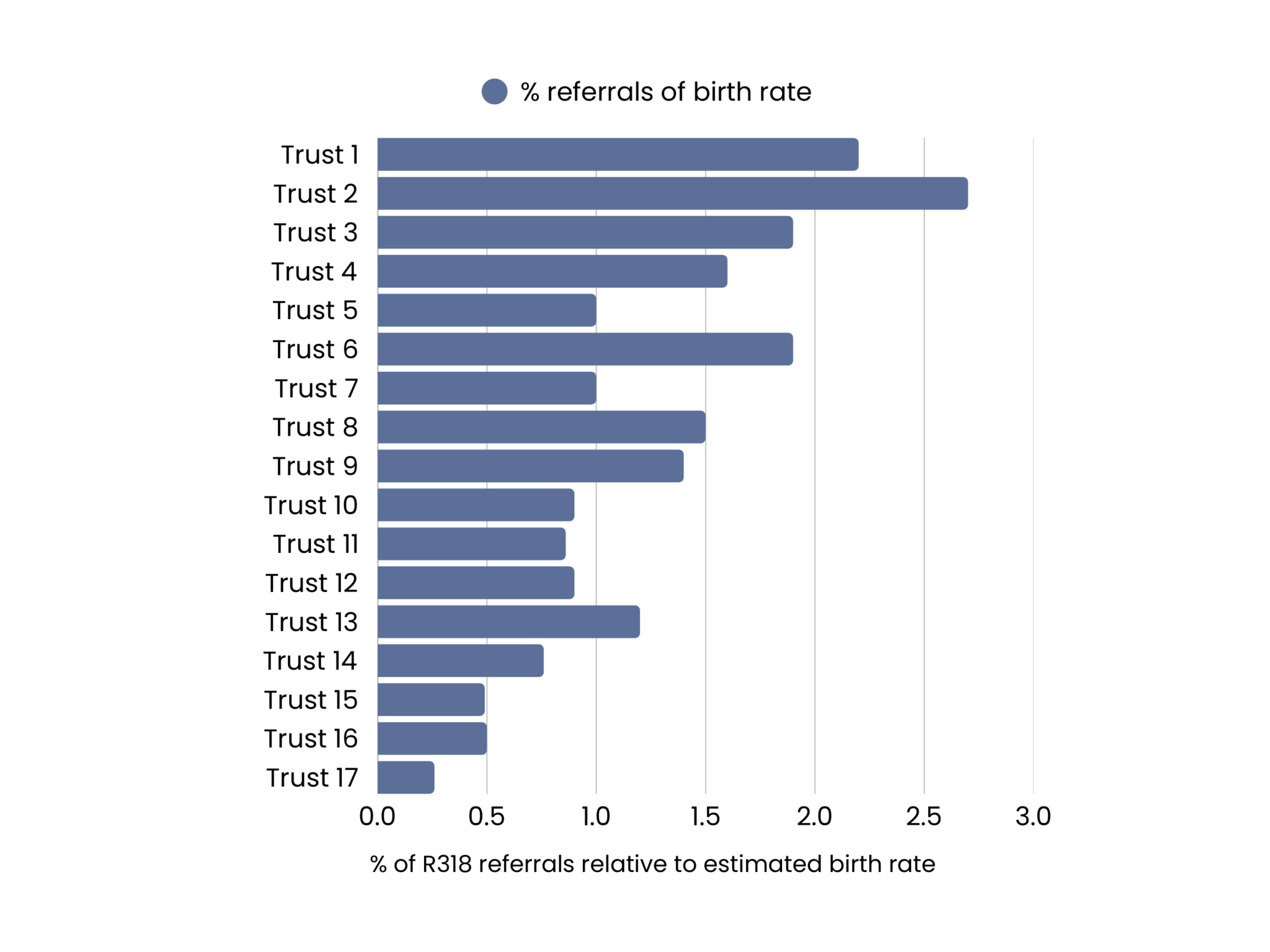
Referrals vary between Trusts. There were 978 R318 referrals in the South East between April 2025 and March 2026. Compared with each Trust’s estimated birth rate, the number of referrals varied widely.
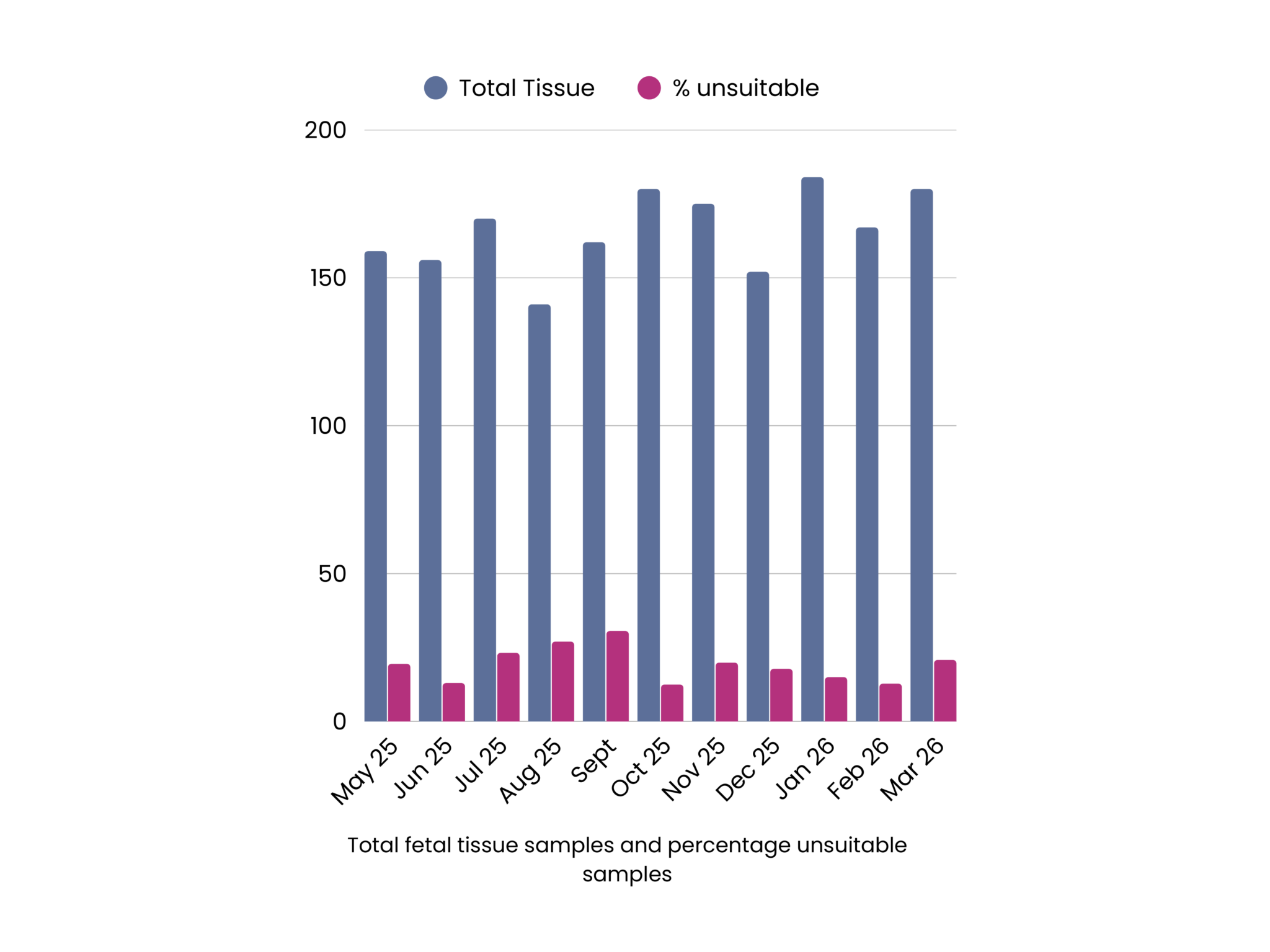
Too many samples can’t be tested. Of 1,968 pregnancy tissue samples received between May 2025 and March 2026, 307 (16%) were unsuitable for testing.
These findings match national evidence. In Miscarriage UK’s 2026 report Miscarriage in the UK: still a ‘dismissive’ and ‘dehumanising’ experience, only 40% of women with recurrent miscarriage said they had been offered testing. The Pregnancy Loss Review (2023) also called for clearer guidance and better clinical education.
What we are doing
-
Producing patient information co-written with women, including the leaflet Genetic testing after three miscarriages.
-
Creating an education package for professionals on referral criteria, sample collection and sensitive conversations.
-
Running face-to-face sessions in every NHS Trust in the South East, after the national webinar on 19 November 2026.
-
Sharing all resources across the NHS Genomic Medicine Service nationally.
Read the full report
Useful links
Our report (June 2026)
How can we improve the experiences of people who are entitled to genetic testing following recurrent miscarriages?
Pregnancy Loss Review (DHSC)
The 2023 independent review of care for pregnancy loss before 24 weeks, with 73 recommendations.
Miscarriage in the UK (Miscarriage UK, 2026)
Miscarriage UK's 2026 report on people's experiences of miscarriage care.
Miscarriage bereavement care pathway (NBCP)
The standards of bereavement care that hospitals in England aim to give after a miscarriage.